







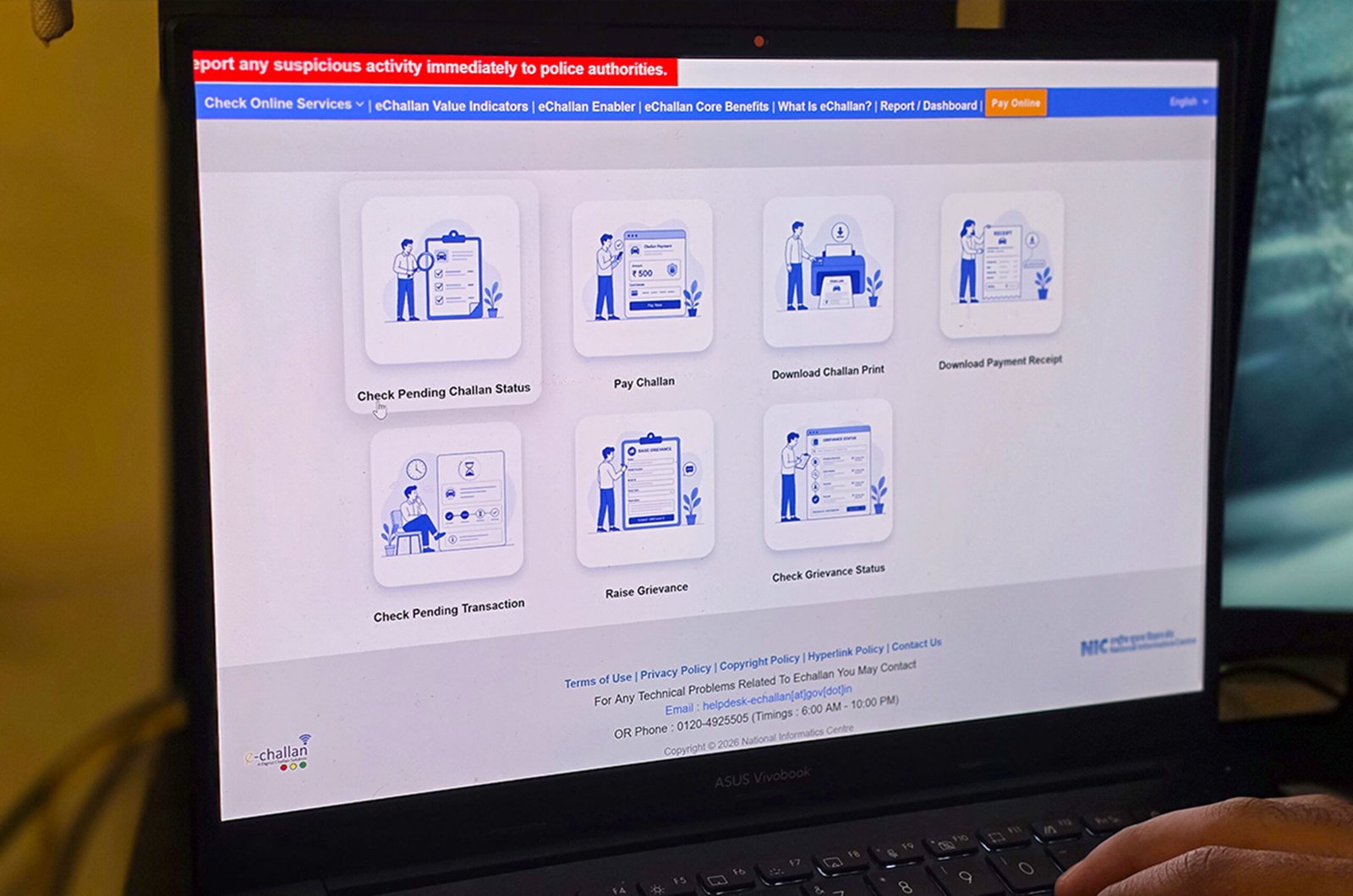
Traffic violations in India can result in fines (challans), and missing a notification does not mean a challan has been cancelled. The government’s electronic challan (e-challan) system allows motorists to check traffic fines, view violation details and pay outstanding amounts online through the Parivahan portal of the Ministry of Road Transport and Highways (MoRTH). The system also allows vehicle owners to retrieve challan details if they have misplaced a notice or deleted the SMS informing them of a penalty.
What is an e-challan, and how does it work?
An e-challan is a digital record of a traffic violation issued by the relevant authorities. It is intended to simplify the process of recording offences, notifying motorists and collecting fines. Traffic police can detect violations through surveillance cameras, automated enforcement systems and other methods. When a camera records an offence, the footage or images can help identify the vehicle and establish the nature of the violation.
Not all traffic violations are detected by cameras, though, as police officials can even directly issue challans upon spotting an offence. Authorities can use the available registration records to retrieve details such as the vehicle’s registration number and the registered owner’s information before issuing a challan.
The details of the fine are generally sent by SMS to the mobile number registered with the vehicle. However, motorists may miss these notifications if their contact details are outdated or they do not see the message. Therefore, they should use the official Parivahan e-challan portal to access their records using their vehicle’s registration number, challan number or driving licence (DL) number, depending on the service selected. In the Parivahan portal, motorists can review the offence and the amount payable before proceeding with the payment.
To check whether a traffic challan has been issued, visit the Parivahan e-challan website and select the option to check challan status. Enter the requested details and complete the required verification. The portal will display the available challan records and their details. If the website displays a ‘Challan Not Found’ message, check whether the information entered is correct, and try again if necessary. The message does not conclusively establish that no violation has been recorded.
To pay a fine, visit the e-challan payment page. Enter the challan number, vehicle registration number or DL number, complete the captcha and select ‘Get Detail’. Review the information displayed, including the violation and fine amount, before selecting ‘Pay Now’ in the payment column. Choose a payment method and complete the transaction. Save the payment receipt or transaction reference for future use. A confirmation message may also be sent to the mobile number registered with the vehicle.
If a challan appears incorrect, motorists should use the official grievance or dispute mechanism instead of ignoring it. They should also verify the details before paying and avoid making payments through unfamiliar links received in unsolicited messages.
What happens if you do not pay a traffic challan?
Ignoring an e-challan does not cancel it. An unpaid fine can remain outstanding and may lead to further enforcement or legal action, depending on the offence, the applicable rules and the issuing authority. Repeated violations or failure to comply with legal directions can lead to driving licence-related proceedings, although suspension is not automatic for every unpaid challan. Similarly, a vehicle may be detained or impounded in circumstances permitted by law, but non-payment alone does not necessarily result in seizure.
Long-pending or eligible challans may be referred to a virtual court or another competent court. Motorists may then need to respond to a notice or comply with further directions. Prolonged non-payment can also lead to formal notices or additional proceedings and even complicate the sale of a vehicle or the transfer of its registration certificate.