









Kim Sharma, who made a memorable Bollywood debut with ‘Mohabbatein‘, has explored several professional avenues beyond acting over the years. From modelling and films to hospitality, talent management and now producing, her journey has been shaped by the willingness to step out of her comfort zone and start afresh. In an all-heart interview with ETimes, Kim reflects on the experiences that have shaped her career, why she chose to move away from acting, and how her work with comedian Sumukhi Suresh on ‘Hoemonal’ led her to explore production. She also opens up about the gender disparity in the entertainment industry, the stereotypes surrounding actresses and models, and why she believes women should have more space to find their own voice and more..
How would you describe your journey so far, from starting out as a model at 15 to exploring different avenues professionally?
It’s been crazy in the sense of good crazy. I started off very young, and I think when I began, there wasn’t a lot of purpose or direction to whatever I did. I got discovered as a model when I was 15, and it meant financial independence. It welcomed me into a world that I had previously had no access to. Advertising back in the 90s was a very potent, creative industry, full of cool people. For me, as a 15-year-old, it was eye-opening. So, we went down that road.Then films happened, which was a totally different beast to straddle. But nonetheless, it was films, and again, all that recognition and attention at a young age. For a long time, I just went along with whatever was happening.I also remember feeling that I wasn’t 100% ingrained in whatever I was doing at that point. When I was about 30, I stopped doing films and decided to pivot. I’m 46 now, and I’d say the last 15 years have been milestones for me, year on year. I decided to put a lot of what I had already established over 15 years behind me and start from scratch. It’s been a journey of immense learning, self-exploration and self-knowledge.
Tell me more about the self-exploration part.
There is an aspect of yourself that you tend to explore when you’re personally living your life. But I think the amount you learn about yourself through professional endeavour, for me at least, has been huge and had a lot of impact on me.I’ve done, experienced and learned so many things in my almost 26-27-year career that I feel very wise. I don’t know if I’m qualified to say that, but I feel like I know so much more and have experienced so much. I think life experience is the biggest currency you can carry, and I’m happy to have had so many opportunities to pivot.
What led you to move away from acting and explore the business side of things?
A lot of things that have happened to me in my life, most of them, actually, have been organic opportunities. I’m a person who loves to go with the flow, and I’m also inherently somebody who loves to take on new things. I think I was able to just go with it.The first step was getting married, moving out of the country and stopping films. That became a natural setting for me to do something else. In that environment, I worked in hospitality for five years. That was the starting point for me to understand that having good looks or being skilled in front of a camera is wonderful, but perhaps my skill set runs much deeper and wider in other spaces.In this space, I think I realised that the way I could use my mind in business, or create value through something tangible, which is money and revenue, was a much more potent skill set than the one I’d been exploring for the last 10-odd years. I felt much more work satisfaction from there. That seed was planted at that point, and even after I came back, I needed to work.
How does one have the gumption though to start from scratch? Didn’t it feel like a risk?
Of course, film, cinema and being an actor came up again as something I could explore. But very clearly, the answer for me was no. I feel that’s where the word gumption, or courage, comes in. Once you have clarity on what works for you, what you really love doing or enjoy doing, it’s easy because it’s a choice, and you’re not doing it because you lack options. For someone like me, if I choose to do something, I welcome whatever comes with it, the highs and lows alike.
What inspired you to come on board as a producer for a stand-up comedy special like ‘Hoemonal’, and how did the project come about?
I’ve lived with this piece for about two and a half years. I met Sumukhi Suresh when I was doing talent management. When I first saw her, I had a very strong instinct that this was a person who would travel the distance. At the time, I had no understanding of stand-up, the industry, the business or everything it encompassed.I candidly told her that I didn’t know anything about this particular business of hers and that perhaps we should outsource it. That was the decision we took because I didn’t have the wherewithal. But when I took that to the market, I realised something very early on. As with most things, unfortunately, there was a huge disparity in the way female comedians were received for their voice and their order of business. They were very much a subset of male comedians.I couldn’t understand why because I was concentrating on the piece and the artist. For me, it was gender-neutral. It didn’t matter whether it was a boy or a girl; it was great that it was a girl. She spoke in a voice that I felt had a lot of relatability across the board. I couldn’t understand the lacklustre response I was receiving from people in the business, the big boys of the business. Then it hit me: this was the boys’ club I had encountered. I had a decision to make at that moment. This was the boys’ club, and this was how one would have to play the game if we chose to play with them. But how about we started a girls’ club? Probably, the only members at the start would be Sumukhi and me, but let’s see how it goes. That became my driving force. Initially, the idea was to create a community around her, the piece and the content, which we did. We toured with it for over two years, taking it nationally and internationally and doing all the things people said wouldn’t happen with it. The more we performed it, the more I realised its potency. For every comic, a special on a platform is the ultimate goal. This was always part of our plan. Along the way, we achieved many firsts with it, many that even the boys weren’t clocking.
So, you wanted to work towards making stand-up comedy gender-neutral?
My point is that I don’t think the boys make half this effort. This isn’t a boy-girl thing. I’m not trying to segregate or take an opposing side, but I’m making comparisons because they do exist. I don’t want to sound anti-boy or anti-girl. I’m not that. But I feel that if Sumukhi’s piece does well, as it should and is, it becomes a fire starter for other female comedians. It becomes a moment for this to happen much more normally, much more as a matter of course. It doesn’t have to be pegged as the achievement of a lifetime or the year. It should be normal for a piece to have its genesis, journey and end. If a piece is good, whether it’s told by a male or a female, it should be able to find its own space. Stand-up comedy could be gender-neutral. It should be. of course, a woman’s psyche appeals to a woman’s psyche, and that is why our community is largely women. But if you watch the piece and hear her voice, it’s not segregated by gender. It talks about things that affect everyone, such as societal expectations and pressure. What does success look like for a human being? It looks like being told that by a certain age, you’ll do this, and by another age, you’ll do that. If you don’t reach those metrics, a large portion of the world finds you unsuccessful. What does it take to be brave in the face of that perceived unsuccess? These are things I really want to push through this piece.
How do you think the industry has evolved in terms of opportunities and acceptance for women?
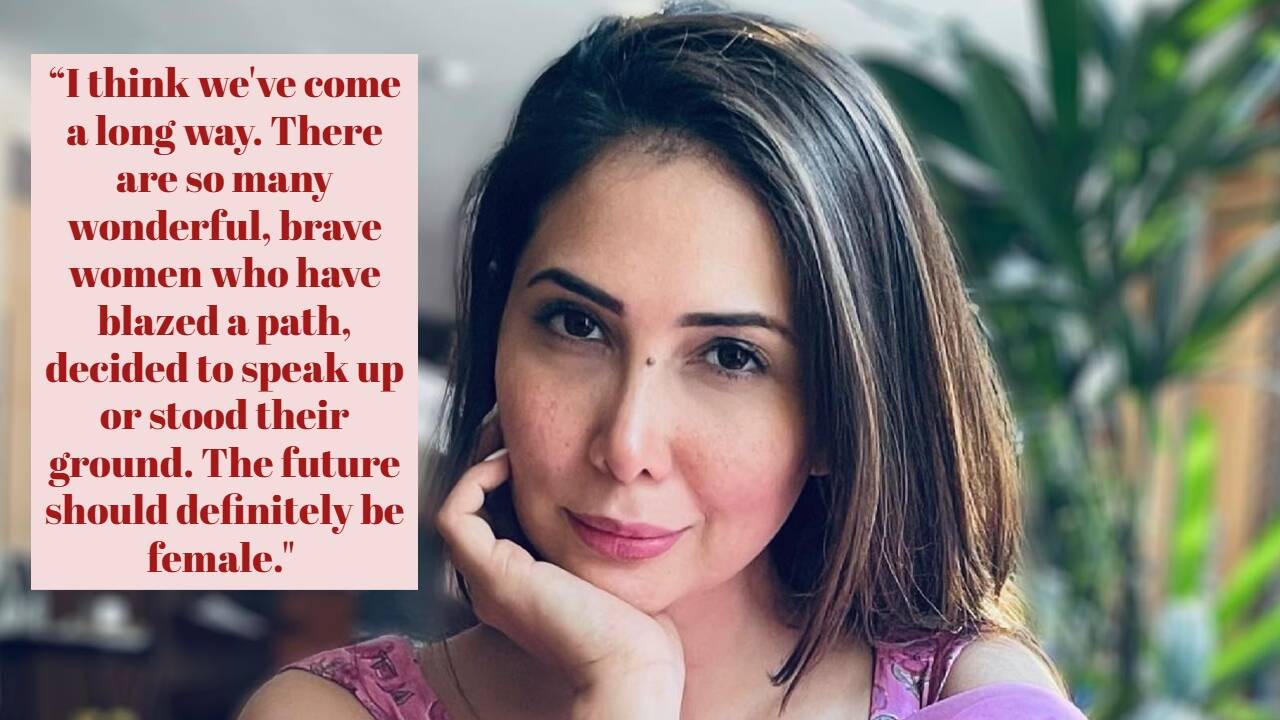
I think we’ve come a long way. There are so many wonderful, brave women who have blazed a path, decided to speak up or stood their ground. These are exactly the women we need. But while we’ve come a long way, I also think we have a very long way to go.Things become normal when we stop needing to have these conversations and stop reiterating that someone is a female comic. I remember going in for my first meeting with people I wanted to tour with Sumukhi. It was always about her being a female comic, one of the top three female comics. I don’t understand why it has to be emphasised so much. A comic is a comic, but she’s a female comic.
Did you face any male-female stereotypes when you made your debut in movies? And how have things changed now?
I think we’ve come a long way. There are so many wonderful, brave women who have blazed a path, decided to speak up or stood their ground. These are exactly the women we need. But while we’ve come a long way, I also think we have a very long way to go. Things become normal when we stop needing to have these conversations. When these things stop being the norm and conversations revolve around the value of what someone brings to the table, rather than their gender or biology, I think we’ll be ushering in a new era.Having said that, I think our generation is the one that straddles this and carries the burden most heavily. I come from an extremely matriarchal home, so I’ve always been lucky enough not to experience gender disparity in my own house. But in general, I think the generation before us didn’t have as much awareness. Then awareness came into our souls, bodies and blood because it all became too much. The new generation approaches it with a lot more ease, and I would definitely give credit to parents who raise their children this way today. I think the future is bright. The future should definitely be female because it’s currently male, and look at the mess we’re in.
You spoke about having to deal with perceptions, did you also have to deal with the stereotype that models or actresses may not have skills beyond their appearance?
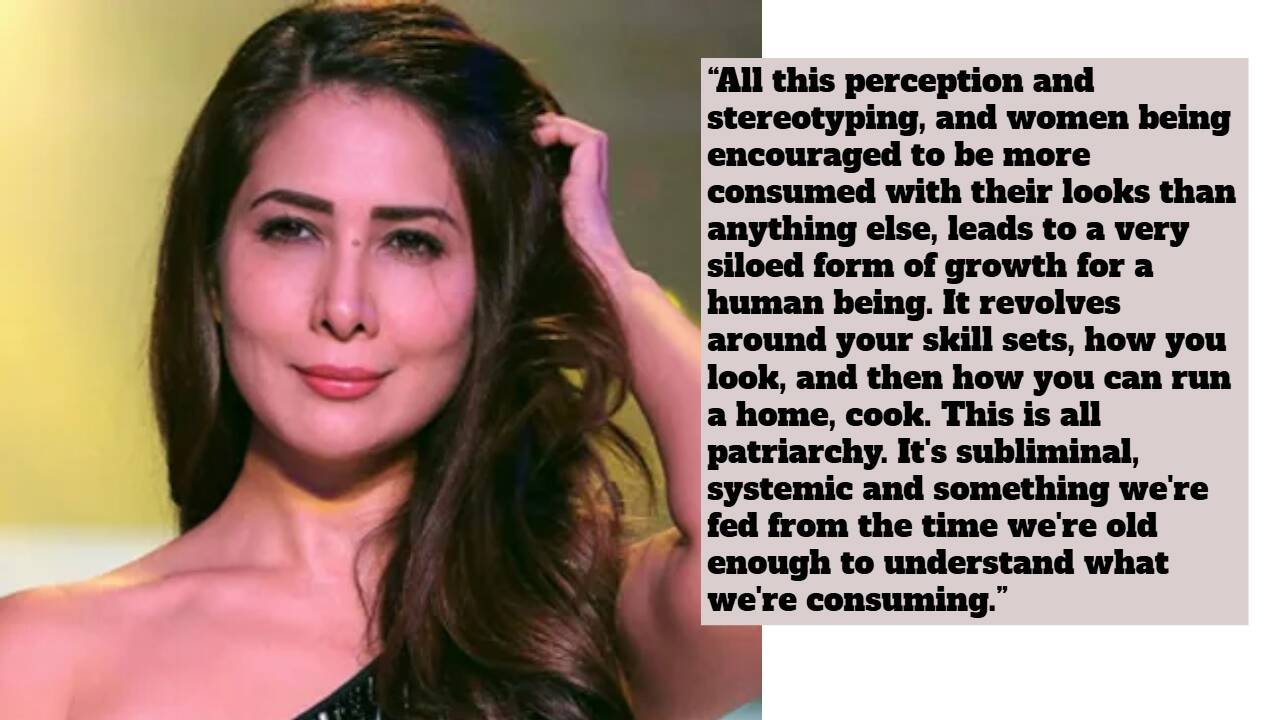
All this perception and stereotyping, and women being encouraged to be more consumed with their looks than anything else, leads to a very siloed form of growth for a human being. It revolves around your skill sets, how you look, and then how you can run a home, cook or do some bizarre stuff like that. This is all patriarchy. It’s subliminal, systemic and something we’re fed from the time we’re old enough to understand what we’re consuming.I don’t really subscribe to it, nor do I give it much importance, because I feel that the more you shine a light on it, the more you’re creating polarised views and waking up people’s dormant, systemic patriarchal views. I prefer to do the work rather than get into the why or what of it.But yes, I do face perception as something that really comes in my way. It’s something I have to continually battle, but I don’t feel tired by it. I feel invigorated because I think, this is who I am, and this is the society I live in. These are the thoughts that exist, and if I have to change them, there will be a certain amount of thought and work I have to put into it. That’s just what it is. So we do it happily and with a lot of pleasure.
What do you think is the biggest barrier women face in the entertainment industry today?
3k+ users shared opinion today
5k+ users already voted today
3k+ users shared opinion today
What was it like stepping into talent management, especially when you had no formal training in the field?
Karan Johar spotted it in me because he is that person. He gave me the job, and I gladly took it from him. After that, it seemed more instinctive to me because I don’t really have a formal education in this field. I definitely haven’t trained in any of this. Perhaps years of experience in films were something I could draw from. It put me in a very sweet spot where I could understand both sides of the coin. I could understand the artist’s point of view because I had been there, but I could also understand the business point of view because I was there. I think I had a larger view. When you can look at the bigger picture, you can actually create it. So I think this really helped me. This is what I say: nothing in life is a waste. Today, I may have done a feature film when I was 18 years old, but today, that experience comes back to give me the life experience, lessons or whatever else I need to help me in what I could be doing now. Everything is interconnected, and everything adds value. That’s why I’m always happy to go out and try new things because you never know what works where and how. Even producing this show has been very instinctive. I don’t have any background in production, but it came to me because I suppose it’s very instinct-driven for me.
‘Mohabbatein’ remains one of your most memorable films. How does it feel to still be remembered for it, even after all these years?
I think that’s the genius of the film that was made. It really speaks to how impactful cinema can be. I think the newer generation doesn’t really know me at all. I’m still in the millennial Gen X bracket, where most people who remember me are now in their 40s, 50s or late 30s. Hopefully, as time goes on, I’m known for other things besides that. But I think it’s fascinating to see the power and impact a film can have on so many lives, including yours.You’re absolutely right. Even today, that is my defining moment. I could have done a million other things, but people still go back to that because it’s the most memorable thing they connect with me, and I have no problem with that. I love it.I can’t say I always love the attention because I’m quite a private person. Life has really opened itself up these days, and everything about your own self is very accessible. I can’t say I like the attention all the time, but I also can’t say that if there were no attention, I’d be fine. I’d probably be a little lost. I love it and enjoy it. Sometimes people come up to you and ask for a picture, and they’re so sweet and loving. This is love that you never asked for or worked for. It’s just there, happily and gratefully, and you take it. Why not?
How did moving abroad and later returning to India change your perspective on life and your career?
Going away was an amazing thing that happened to me. It gave me such a large worldview and introduced me to a whole new side of myself and a whole new side of life. Business was something I had never experienced before, and the life I lived there was huge and plentiful. It gave me so much to learn from. Coming back was also lovely because I missed my country, my friends and home. I was grateful that I had a home to come back to and that I had my roots here. I came back with so much learning that I was able to discern, as you said, whether films were a choice. They were one of the choices. When I came back, I had to work, and there were financial considerations that meant I had to take up a job. Films seemed like the easiest option, but because I had had that experience abroad, knew how much I loved it and believed I could do things with it, I was able to take the harder choice. Because I took the harder choice, I feel life became so much more gratifying for me. I didn’t do things people expected me to do. I worked against the norm, struggled and did things I’d never done before. I took up a nine-to-five job when I came back, which was unheard of for me. I’d never imagined myself doing that. It was just amazing. There was so much newness. It was a choice, and I’m glad I made it. I’m so happy that I’m sitting here today doing this interview with you rather than talking about something mundane.