










NEW DELHI: Resurgence in the price of food items like rice, pulses, vegetables, sugar, fruits, coarse grains and protein rich items like meat and fish is bound to impact the living costs for households. Far from a localised blip in inflation, a TOI analysis of NSO data reveals a sweeping price escalation across the nearly 200-odd food items ledger.DHouseholds which saw price relief earlier this year are now essentially facing a U-turn as prices for both the staples and other daily use items continue to rise, as headline retail inflation touched 6.09% in Oct, crossing RBI’s 6% red line for the first time under the new base series, driven by a widespread firestorm in the food basket which had pushed food inflation to 8.9% in the month.Data shows prices of staple rice (12.5%), millets (38%), jowar (18.7%) and vegetables such as onions (116%), garlic (60%) and ginger (48%) have swung vigorously by Oct from a contraction zone recorded earlier this year. Pulses like arhar (15%), urad (11.6%), gram (7.4%) and fruits such as banana (11%), papaya (15%), lemon (48%), apple (18%) and litchi (17%) also mirror this swing.
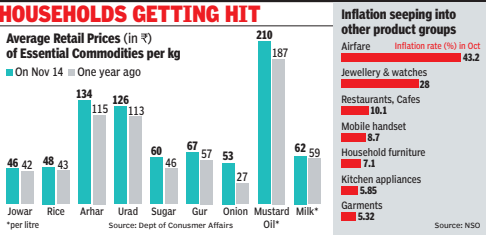
Households getting hit
Protein-rich food items such as chicken (11.3%) and egg (8.3%) saw slight price deceleration in Oct, yet remained high. Buffalo meat (15.3%) and fish (8.5%) prices accelerated further during the month. Cooking mediums which include edible oils such as refined oil (16%), groundnut oil (16.5%), and mustard oil (9.8%), along with spices – dry chillies (23%), coriander (22%) and turmeric (8%) also felt the price pinch.Domestic cost-of-living squeeze is bleeding into the broader macro economy, with dining out becoming significantly more expensive as restaurants and accommodation services inflation jumped to 10% in Oct, driven by a price rise in cooked snacks and limited-service cafes. Transport costs ticked further during the month, on the back of surging domestic airfares (43.2%) and steady inflation in petrol (7.5%) and diesel (8.4%) prices.